The Art of Nothing: Finding Meaning in Emptiness and Blank Spaces
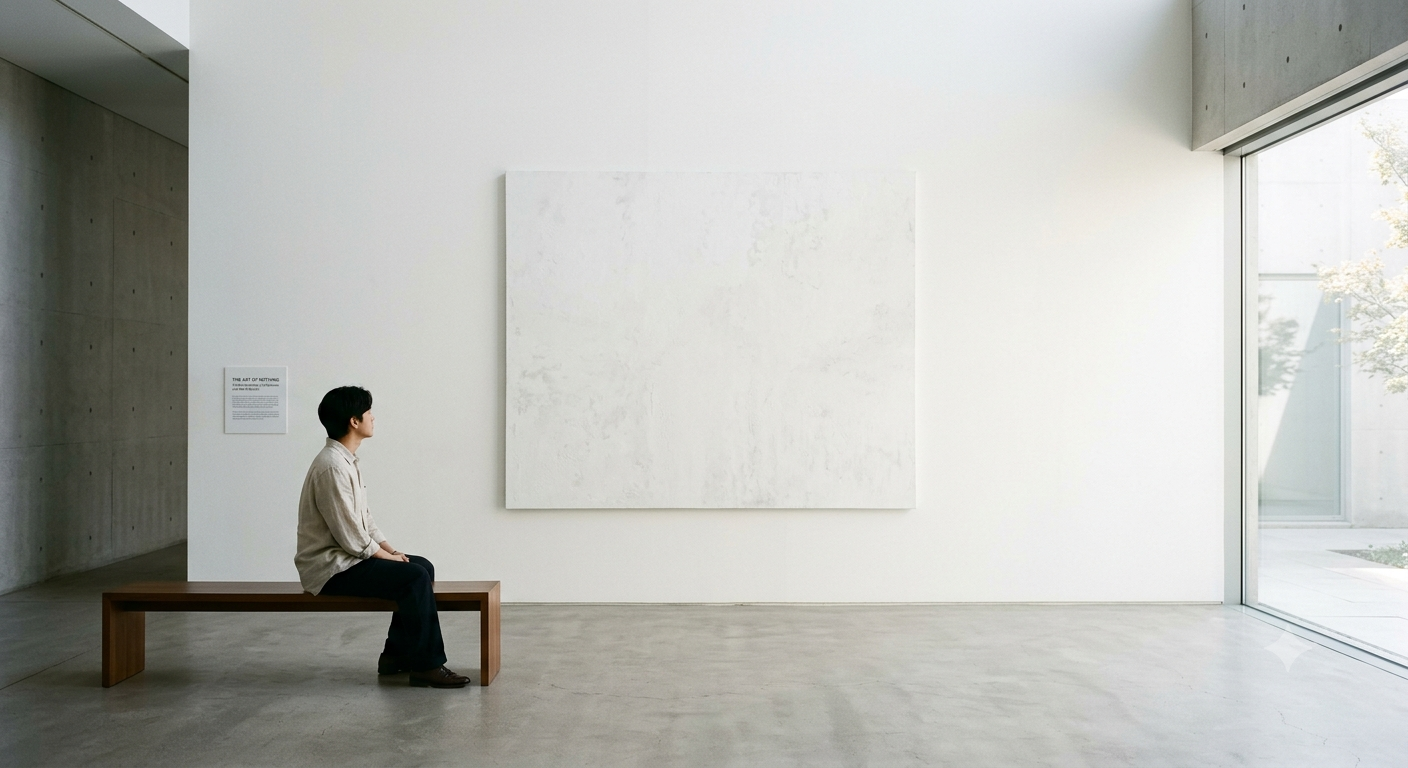
Imagine walking into a prestigious art gallery, expecting to see massive oil paintings or intricate sculptures, only to find a completely blank canvas staring back at you. Or worse, a completely empty room with nothing but white walls and fluorescent lights. Your first instinct might be to think, “Is this a joke? Did someone forget to hang the artwork?”
Well, welcome to the mind-bending world of emptiness in art. Far from being a lazy cop-out, creating art out of nothingness—or “empty art”—is a profound creative choice that has fascinated and frustrated audiences for decades.
The Power of the Minimalist Art Movement
The concept of using vacancy as a medium isn’t entirely new. The radical shift started growing massively during the mid-20th century minimalist art movement. Legendary artists like Yves Klein famously opened an exhibition called The Void in 1958, which featured nothing but an empty gallery room. Later, musician John Cage composed 4′33″, a piece where the performer sits at a piano and plays absolutely nothing for exactly four minutes and thirty-three seconds.
The core conceptual art meaning behind these projects isn’t about what is missing; it’s about what fills the gap. When an artist strips away all the noise, colors, and subjects, they force you to look at the environment around you, the sounds of the room, and most importantly, your own internal thoughts.
The Beauty of Blank Space
In traditional Eastern philosophies, there is a concept known as Ma (in Japanese culture), which translates to the negative space or the deliberate pause. It suggests that the space between things is just as important as the things themselves.
In a world that is constantly screaming for our attention with bright screens, endless notifications, and crowded spaces, appreciating the beauty of blank space has become a form of therapy. Empty art doesn’t feed you a pre-packaged story. Instead, it gives your brain a rare moment to breathe, reflect, and project your own emotions onto the emptiness.
So, the next time you see a piece of art that looks completely hollow, don’t rush to judge. Take a step back, embrace the quiet, and let the emptiness speak to you. Sometimes, nothingness says the most.